Thursday, 9 September 2010

San Pedro de Atacama: una historia en 9 hallazgos /San Pedro de Atacama: a story in nine findings

Llegamos al Hotel cerca de las 20 horas, una mujer amable, en medio de la restricción de luz eléctrica nos invitó a conocer este sitio y estaba perfecto para alojarnos. Pasados los ajustes de rigor salimos a explorar el lugar y buscar donde cenar.

We arrived around 2000h, during the daily power cut, a friendly lady invited us to see her hostal which proved to be perfect. Having installed ourselves we set out to explore and look for something to eat.


Primeros hallazgos: Calles de tierra, andenes de piedra, casas de adobe, techos de barro.

First discovery: earthen streets, stone walkways, houses of adobe, roofs of mud.


Segundos hallazgos: muchas personas amables, todo esta abierto, muchas personas en las calles, varios restaurantes ricos, muchos turistas, muchas agencias de actividades de aventura, muchos destinos proximos, muchos circuitos, muchos cafés con expreso y varios almacenes ofreciendo ropa y accesorios apropiados para las diversas actividades.


Second discovery: many friendly people, everything still open, many people in the streets, various rich restaurants, many tourists, many “adventure tour” agencies, many local places to visit and routes to travel, many cafes with espresso, and various stores offering clothing and accessories appropriate to these diverse activities.

Tercer hallazgos: chicas en el restaurante orgullosas de sus accesorios de aventura, sin una gota de sudor y su pelo muy bien dispuesto para la noche.

Third discovery: girls in the restaurant, proud of their “adventure accessories” without any evidence of sweat and with their hair well-coiffed for the evening.

Cuarto hallazgo: muchos sitios con artesanías y oferta de joyas, nada que comprar, todo textiles de bolivia, o de peru…finalmento esto que podemos llamar artesanía universal: camisetas impresas, accesorios en macramé y los aretes de piedras elaborados en serie en perú o con técnicas basicas en las manos de hippi-artesanos locales. Aparecen joyas en cobre, con tecnicas de manifactura básicas.

Fourth discovery: many places with artesania and jewellery, nothing worth buying, textiles from Bolivia or Peru… everything best described as global standard artesania: printed tee-shirts, macrame accessories, earrings set with semi (very semi) precious stones, set in Peru, or with basic techniques in the hands of local hippie-artesans. There were many examples of jewellery in copper, once again employing basic techniques.

Quinto hallazgo: nos reconocen por Escobar o por las guerrillas, eso es Colombia para los locales.

Fifth discovery: we were recognised for Escobar or for the guerillas, this is Colombia for the locals.

Sexto hallazgo: muchas empanadas grandes, las fritas son mas ricas que las horneadas, suficientes para almorzar con 1. Identificadas nuevas categorías: Pino, Chaparrita, tres quesos y queso, albaca y tomate. Es posible comer rico en varios lugares.

Sixth discovery: many large empanadas, the fried ones tastier than the baked ones, one being sufficient for a lunch. We identified new forms: Pino; Chaparrita; three cheeses; and cheese, basil, and tomato. It is possible to eat well in various places.


Séptimo hallazgo: cualquier lugar existente en la periferia y poco usual para un citadino es aprovechado para el turismo. La aldea de tulor y el valle de la luna muy cerca son lugares hermosos, especialmente divertidas las minas de sal. También es divertido ver a todos los turistas, incluidos nosotros, correr por una montaña de arena para tomar un buen lugar para apreciar el atardecer y tambien a los turistas. Hay un ecosistema parecido al existente en el sur de bolivia y el salar de uyuni, así que para aventureros menos dispuestos a la incomodidad resulta un lugar perfecto.

Seventh discovery: whatever place in the area is unusual for city-dwellers is approved for tourism. The Aldea de Tulor and the Valley of the Moon nearby are beautiful places, particularly enjoyable being the salt mines. It was also amusing to see all of the tourists, including ourselves, hurrying to ascend a mountain of sand to reach a good spot to view the sunset and the other tourists. It is an ecosystem very similar to that of the south of Bolivia and Salar of Uyuni, hence a perfect place for tourists less disposed to discomfort.

Octavo hallazgo: librería aquí es un lugar sin libros y varias elementos de papelería. Hay muchos perros en las calles, todos disfrutando el letargo del calor.

Eighth discovery: a bookshop is a place without books. Many dogs in the streets, all enjoying the lethargic heat.


Noveno hallazgo: un lugar perfecto para bajar el ritmo, tomar café rico, escribir los blog y atender otros asuntos de la vida cotidiana, así que aquí estamos escribiendo para ustedes una versión de nuestras impresiones.

Ninth discovery: a perfect place to slow the pace, drink good coffee, write up the blog, and attend to various tasks of normal life, hence we are writing up for you our impressions.

Besos

Alan y Marce

P.D. En las noches el cielo estrellado altera los sentidos.

P.S. At night the starry sky stuns the senses.

Ahora con Fotos! / Now with photos! Entre lagunas y montañas – Between Lakes and Mountains


Después del salar, iniciamos nuestra travesía por un complejo de lagos, desiertos y montañas al sur de Bolivia. Las rutas son pequeños caminos abiertos por el tránsito de vehículos y que no cuentan con mantenimiento alguno, entonces las calamitas, las piedras y las curvas verticales son la constante del trayecto.


After the Salar, we continued our route through the lakes, desert, and mountains of southern Bolivia. The routes are open tracks for vehicle transit and are essentially unmaintained, hence one can count on corrugations, stony surfaces, and “vertical curves” throughout the journey.


El segundo día iniciamos nuestra ruta pasando por el un río cerca del poblado de Cabrera, allí aves de altura iniciaban su día, ofreciendo un espectáculo relajante y hermoso con su vuelo. Luego visitamos tres lagunas, todas de colores diferentes. La primera tenía una gran población de flamencos, gaviotas y pequeños patos, acompañados de un pequeño zorro oportunista, estar allí no solo fue un placer para el paladar, porque era el sitio para almorzar, sino tomar algunas fotografías. La segunda, más desolada con algunos flamencos y la tercera sin flamencos pero con algunas socas.

The second day started with the route passing by a river near the village of Cabrera, where local birds were starting their day, offering a tranquil spectacle, with their beautiful flight. Later we visited three more lakes, all of different colours. The first has a large population of flamingoes, gulls, and small ducks, as well as an opportunistic fox. Our stop there was not only a pleasure for the palate, since we had lunch, but also as a photographic opportunity. The second, more desolate, had fewer flamingoes, and the third, no flamingoes but with some cormorants.

Pasamos luego hacia el desierto de Silole y dentro del mismo hicimos el paso del Inca, un paso de 4800 msnm entre rocas erosionadas que ofrecen un paisaje singular y que resulta retador por las características del suelo. Luego del paso, la arena roja del desierto se apodera del entorno y lo único que queda es ir a descansar.


Later we passed through the Silole Desert, and within this the Pass of the Inca, a pass of 4800 mMSL between eroded rocks offering an unusual scenery and a challenging passage, given the characteristics of the stony surface.


El tercer día, continuamos el paso del primer desierto para llegar a un lugar con más rocas erosionadas, con formas singulares y atractivas, donde todos los turistas buscan la foto de la vida. Continuamos la ruta hacia el sur para entrar a la Reserva natural Eduardo Avaroa. Una vez allí, visitamos la laguna colorada y nos deleitamos en la belleza de los Flamencos, el color de la laguna y el espejo de agua.

On the third day, we continued through the same desert, to arrive at an area with more eroded rocks, with unusual and attractive shapes, where every tourist seeks to achieve the “once in a lifetime” photo. We continued south to enter the Eduardo Avaroa Nature Reserve. Once there, we visited the Laguna Colorada, and enjoyed the beauty of the flamingoes, the colour of the lake, and its mirror surface.

En ruta hacia la frontera, existe un nacimiento de agua dulce termal, dispuesto como una poseta, que pasa por un salar, resulta un espectáculo muy singular estar dentro del agua, con una vista de 180 grados hacia el salar y observando el paso tranquilo de las vicuñas por entre las islas de agua.

On the way to the border, there is a hot spring of freshwater, captured in a bowl, and flowing into a salar, which provides a most unusual spectacle, with a 180 degree view of the salar, in which vicuñas are making their way between islands in the water.

Después de una hora más de ruta y pasando por la laguna blanca llegamos al control fronterizo, cargamos con gasolina el carro y nos despedimos de Luis, Sonia y Anahi, nuestros guías por este entorno. Su trabajo fue grandioso, comprendieron rápidamente nuestros intereses y logramos establecer un vínculo valioso, sin su sabiduría, esfuerzo y servicio nuestro recorrido por este sector hubiera sido un gran problema.

After a further hour of travel, past the Laguna Blanca, we arrived at the border, filled the tank with gas and said goodbye to Luis, Sonia, and Anahi, our guides through this wonderland. Their contribution was magnificent, they rapidly understood our interests and we established a valuable relationship; without their wisdom, capability, and support our journey through this area would have been much more difficult.

Pasada la frontera, siguió la ruta de tierra, más ancha, más afirmada, pocas piedras grandes y de pronto una superficie lisa y sin calaminas estaba bajo nuestras llantas: “asfalto”, el silencio de una pista excelente nos recibió en Chile y así iniciamos un descenso lento y progresivo hacia San Pedro de Atacama.

Once past the border, the dirt road continued, however wider, firmer, and with few large stones, and soon our tyres encountered a surface smooth and without corrugations: “tarmac”, the silence of an excellent road greeted our entry into Chile, as we started a smooth descent into San Pedro de Atacama.

Besos

Alan y Marce

Nuevo¡ Salar de Uyuni: una experiencia espaciosa/New¡ Salar de Uyuni: a spacious experience


Esta es una vista del Salar de Uyuni desde la montaña antes de iniciar el descenso a la ciudad. El Salar de Uyuni se encuentra a 30 Km de la ciudad y una de sus entradas es por Colchani.

Here is a view of the Salar de Uyuni from the mountain before beginning the descent to the town. Our entry to the Salar is about 30 Km from Uyuni at Colchani.

In the area close to Colchani the community has rights to produce the salt, which involves digging up a volume of salt into cones with a unit of value, which are then processed at a plant locally.

En el área cerca de Colchani la comunidada tiene derecho de producir sal, esto implica excavar el salar para hacer una pila de un volumen determinado, que tiene una unidad de valor y que luego es transportada y procesada en una planta local.

Driving into the Salar, the horizon expands, the mountains behind drop below the horizon, and time and space open up. It is both strange and exhilarating to be crossing this expanse of white. The effect of the heat creates a mirage effect, which adds to the strange feeling. Very few places exist in which it is possible to drive across a flat surface with virtually no points of reference except the horizon.
Manejando en el Salar, el horizonte se expande, las montañas se esconden debajo del horizonte y el tiempo y el espacio se abren. Estar cruzando esta extensión de blanco es al mismo tiempo extraño y excitante. El efecto del calor crea espejismos, que se adicionan al sentimiento de extrañeza. Existen muy pocos lugares en donde es posible manejar a través de una superficie plana sin puntos de referencia excepto el horizonte.

Much of the surface is marked with polygons, whose existence is explained in various theories; the most prevalent being that the water in the surface freezes at night, creating stresses which cause the edges of these polygons to be forced up into small ridges, creating the boundaries of the polygons.


Mucho de la superficie estar marcada por polígonos, cuya existencia esta explicada en varias teorías; la más prevalente es que el agua en la superficie se congela en la noche, creando estrés que causa los cortes en estos polígonos que son forzados hacia arriba en pequeñas protuberancias, creando los limites de los polígonos.


We headed for an island in the Salar - Incahuasi, which is populated with a variety of birdlife, and with a great number of hairy cactus. The views of the Salar from the summit of the island are spectacular: the air is clear, the salt brilliant white, and the distant mountains surrounding the Salar are various tones of grey, blue, and brown.

Nosotros nos dirigimos a una isla en el Salar – Incahuasi, que es habitada por una variedad de aves y por un gran numero de cactus gigantes. La vista del salar desde la cumbre de la isla es espectacular: el aire es claro, la sal blanco brillante y las montañas distantes alrededor del salar tienen varios tonos de gris, azul y café.


The cactus not only add to the view, they are also frequented by birdlife, as you can see here.

Los Cactus, no solo agregan al paisaje, ellos también visitados por las aves, como pueden ver aquí.


Leaving the Salar behind we headed for our night stop at the Hotel de Piedras. Arriving at dusk, the sky behind us was a rich curtain of blues and pinks. This hotel, and the our hotel the following night, are run by the local communities, in an eco-friendly way. The welcome from our host was warm, however the night was not. In the morning the car registered -5oC, and reportedly the lowest temperature during the night was much lower. The bedclothes were warm, however were heavy and so we felt like laboratory frogs while in bed.

Dejando el salar atrás, nos dirigimos por nuestra noche al Hotel de Piedras. Llegamos al atardecer, el cielo atrás nuestro era una rica cortina de azules y rosas. Este hotel y el de la siguiente noche, son operados por comunidades locales, en la vía de los eco amigables. La bienvenida por nuestro anfitrión fue calida, sin embargo la noche no. En la mañana la temperatura registrada por el carro fue de -5oC y escuchamos que la temperatura más baja de la noche fue mucho más baja. Las ropas de cama fueron calidades, sin embargo pesadas y nosotros nos sentimos como ranas de laboratorio dentro de la cama.

Nota adicional

Uyuni es un municipio relativamente nuevo, que existe gracias a las actividades industriales de la zona, su infraestructura es limitada y también su desarrollo turístico, a pesar de ser el centro de llegada de todos los turistas a la zona. Visitamos el cementerio de trenes y además de observar con tristeza la chatarra, resulta muy poco alentador no poder recuperar la historia de estas locomotoras que fácilmente encantaría a cualquier interesado. Nos alojamos en el hotel Luna Salada, un lugar "simpático" dado que está construido con bloques de sal , sin embargo la decoración "ecléctica" puede ser desalentadora. El ambiente exterior, al margen del salar, es fascinante, la fotos relativas a este segmento son muestras del atardecer allí.

Additional Note:

Uyuni is a relatively new town, which exists thanks to the industrial activity in the area, its infrastructure is limited, as well as its tourist development, despite being the key centre for all tourists arriving in the area. We visited the “Train Cemetery”, observing with sadness the wrecks of locomotives and stock. It seemed a lost opportunity not to be able to learn of the history of these trains, which undoubtedly has its magic. We stayed at the Luna Salada hotel, a “sympathetic: place, in that it is built entirely of salt blocks, and floored with crushed salt. Notwithstanding, the “eclectic” decoration could be viewed as disappointing. The exterior ambience, on the margin of the Salar, is fascinating, the photos alongside this note showing the dusk from this viewpoint.


Ahora si besos,

Marce y Alan


Un paseo corto por Potosí / A brief visit to Potosí

A través de una ruta suave de descensos y ascensos sucesivos disfrutamos los múltiples cambios del paisaje, todos en el grupo de los desolados: zonas secas, cactus, rocas con minerales oscuros y brillantes y puna, para finalmente observar el imponente cerro rico.

During a smooth journey of undulating ascents and descents we enjoyed lots of changes of scenery, all of which were in the dry category: dry zones, cactus, rocks with dark and shiny minerals, and puna, with the imposing Cerro Rico (rich mountain) coming into view.


Nos aproximamos a la ciudad y las puertas de la misma nos recibieron, pasamos a través de ellas y el diseño intrincado de la ciudad y su terrible tráfico saltaron a la vista, con una relación carros vías de 3:1

We approached the city and were welcomed through the gates, passing through them into the intricate layout of the city and its appalling traffic, with a ratio of cars to streets of 3 to 1.


Superada la prueba de paciencia inicial (1 hora pasando el trafico en 10 cuadras), logramos recorrer las calles ahora a pie y con una alta conciencia de sus características. Varias calles con adoquín de piedra, algunas con canto de rió y muchas iglesias.

Having passed the initial patience test (1 hour in the traffic in a 10 block area) we set out into the streets on foot, and with a feeling of knowing them intimately already. Various streets surfaced with concrete blocks, some with river cobbles, and lots of churches.

Visitamos la casa de la moneda, un lugar emblemático e importante para la población potosina, no solo porque allí se producían monedas para España y posteriormente para el país, sino porque recuerda la importancia de esta región en la historia de Bolivia. La edificación está bien conservada y el museo presenta con delicadeza sus piezas y riqueza. Es indispensable recorrerlo con un guía del lugar, quien va abriendo y cerrando las salas en la medida en que el grupo pasa por ellas, siempre escoltados por un Policía, esta forma de recorrido resulta “singular”.

We visited the "Casa de la Moneda", a place emblematic for the people of Potosi, not only because it produced coins for Spain and later for Bolivia, but also because it reminds us of the importance of Potosi in the history of Bolivia. The buildings are well-preserved and the museum presents well its riches. It is required to tour with a guide, who opens and closes the doors of each section as the group passes, always accompanied by police, resulting in a singular experience.

Finalmente, esta foto muestra claramente las diferencias de genero en la protección de los trabajadores, las mujeres carecen de cualquier elemento de protección personal y superan en número los trabajadores masculinos… que buen negocio.

Finally, this photo shows clearly the differences between gender in terms of work safety, the women without any personal protective equipment, and exceeding the male workers significantly...what a good business...

Besos a todos y todas

Marce

Wednesday, 8 September 2010

Sucre: tranquilidad en el corazón de Bolivia / Sucre: Tranquility in the heart of Bolivia

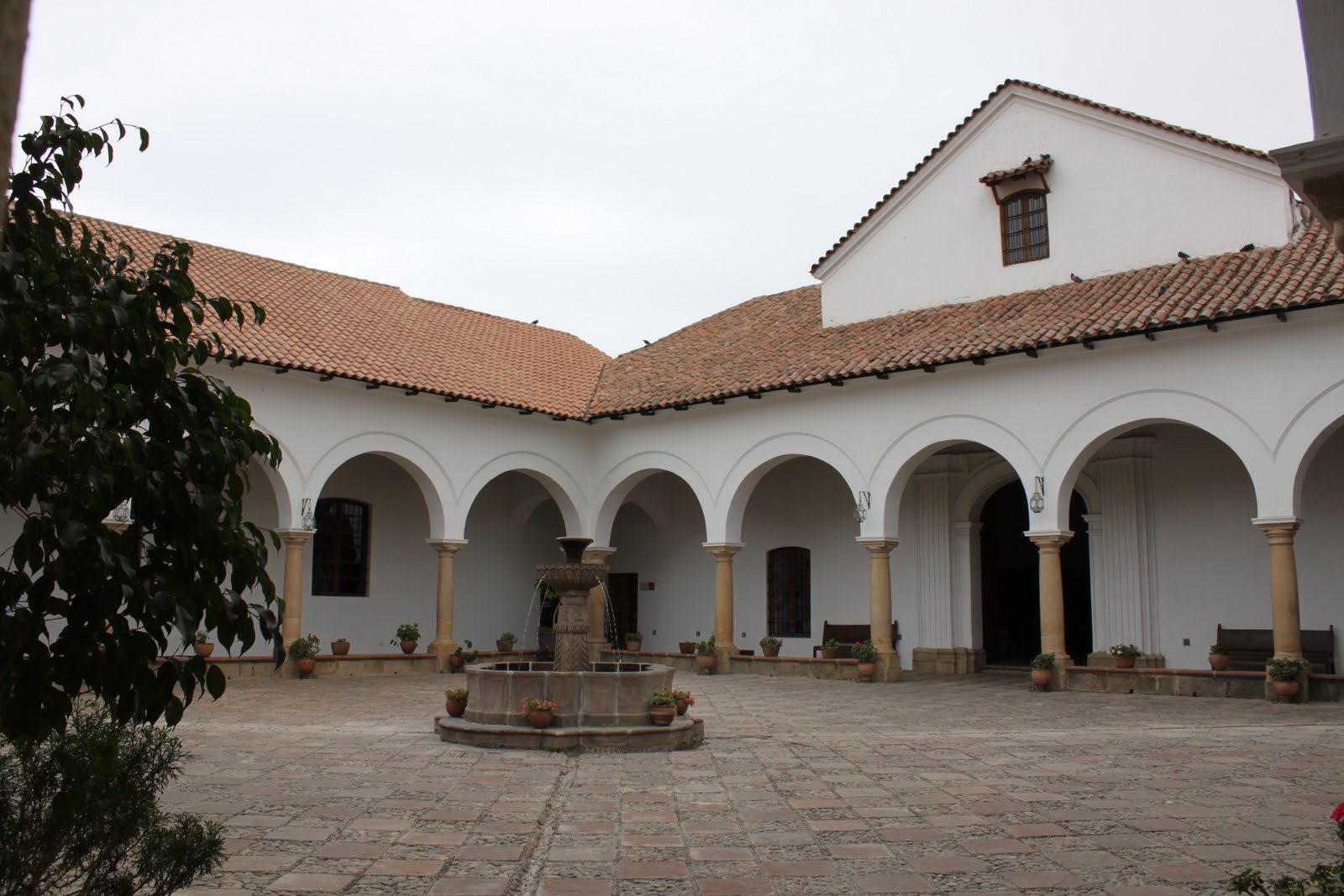
Sucre es una ciudad escencialmente amable, si bien es extensa desde el punto de vista geográfico, su dinámica es la de un población pequeña, lo que permite que te sientas en un lugar tranquilo para resolver problemas. Su arquitectura es una mezcla de construcciones de todas las épocas, predominantemente blancas y con techos de teja o similares. La velocidad de la ciudad te da espacio para recorrerla de forma independiente y tranquila, lo cual resulta apropiado porque no es una ciudad turística específicamente.

Sucre is an essentially friendly city, and while its geographic extent is large, it operates as a small town, which permits it problems to be resolved calmly. Its architecture is a mix of construction over several periods, predominantly white and with roofs of tile or something similar. The speed of the city allows space to move around independently and in tranquillity, which was appropriate because the city is not specifically a “touristy” destination.

El primer día en Sucre se orientó a resolver problemas: Llantas y mantenimiento del carro. En relación con las primeras hicimos un recorrido de todas las zonas recomendadas por diferentes consejeros del lugar para finalmente descubrir que el aro 17 es absolutamente escaso en Bolivia y solo es posible ubicarlo en La Paz, así pasamos de las llantas preferidas a las llantas posibles de conseguir y aceptamos la necesidad de esperar dos días por su llegada. En relación con el mantenimiento, visitamos el centro de servicio autorizado de Nissan, si bien su atención respeta los estándares de la marca eso toque coloquial del sitio estuvo muy presente en toda la atención, con sus ventajas y desventajas: en relación con las primeras trato amable y pronta entrega de información valiosa sobre donde comer, donde ir, donde comprar y que hacer; frente a las segundas, menos rigor en la limpieza, información imprecisa, más dificultad para clarificar la atención requerida. Finalmente, lo esencial bien.

The first day in Sucre was devoted to resolving various problems: tyres and maintenance of the car. With respect to the former we toured various places recommended by various advisors to discover that 17 inch rims are essentially not in use in Bolivia, and that the only source was La Paz, and so we shifted our focus from seeking the preferred tyres to seeking tyres which were available and which required two days to be delivered to Sucre. Regarding maintenance, we visited the approved Nissan agency, which while being a little parochial in terms of application of the standards of quality in maintenance, was very good in terms of attention, with advantages and disadvantages: with respect to the former, it was very friendly and gave us valuable information on wher to eat, where to visit, what to buy, and what to do; in terms of the latter, there was less rigour in cleaning the car, imprecise information, and more effort in clarifying what was needed. In the end however, all was essentially fine.

Nuestras investigaciones progresaron muy bien en Sucre: en relación con las calles levantamos evidencias valiosas en la Casa de la Libertad, que tiene una biblioteca encantadora y un blibliotecólogo, que honra su profesión con generosidad. La Biblioteca Escolar con una bibliotecóloga amable y muy buena orientadora y el Archivo Nacional de Bolivia, donde pudimos explorar el archivo fotográfico del bicentenario y obtener mas evidencia sobre la transformación de las calles. En relación con las empanadas, descubrimos tres variedades nuevas, de dulce y sal bastantes singulares. Y frente a los tejidos pudimos conocer con más precisión la producción de la cultura tarabuco y de otras dos culturas del norte de Potosí.

Our investigations progressed well in Sucre, with respect to streets we came upon valuable information in the Casa de la Libertad and its enchanting library, whose librarian is an honour to his profession with his generosity; The Student Library and its friendly and well-informed librarian; and the National Archive of Bolivia, where we were permitted to explore the photographic archive of the bicentenary and obtain more information regarding the transformation of the streets. Regarding empanadas we discovered three new varieties, of sweet and salt, particularly singular. On the textile front we learned more with respect to the production of the Tarabuco culture and of other cultures to the north of Potosi.

No podemos terminar el post de Sucre sin hablar de Joy Ride, un sistema de turismo con agencia, café, restaurante y bar, disponible para todos los turistas en la ciudad. Sus servicios son realmente destacados y la amabilidad del grupo en todos los ambientes resulta deliciosamente fidelizadora.

We could not leave Sucre without mentioning Joy Ride, a touristic complex including tour agency, café, restaurant, and bar, easily accessible for travellers. Its services are really top class and the friendly team in all of its departments delivered happy results.

Besos

Alan y Marce

Wednesday, 1 September 2010

En Sucre, casi que no / In Sucre, but only just...


Luego de una noche de descanso obligado y con el canto de los pájaros al amanecer iniciamos el día. Baño con agua escasa pero caliente y luego a la calle a buscar desayuno. Para nuestra sorpresa, Don Pedro Gutierrez Cuellar, el dueño del hotel, había llegado y muy amablemente se aproximó a nosotros para explorar nuestra situación. Posteriormente, nos invitó a su casa a tomar el desayuno y compartió con nosotros sus historias, costumbres y anécdotas, finalizó su intervención, gestionando la apertura del Museo porque, de acuerdo con su versión, nosotros queríamos visitarlo, entonces fuimos al Museo del lugar.

After a much-needed night´s rest the birdsong woke us to the new day. A shower in rationed but hot water, and thence to seek breakfast. To our surprise the owner of the hotel, Don Pedro Gutierrez Cuellar, had arrived and very amiably asked us about our situation. He then invited us to his house for breakfast, and he shared with us stories, customs, and anecdotes, finally arranging for the museum to be opened for us, for according to him, we wanted to visit it, and so we duly went.

Allí nos encontramos con un Charango de 6 metros de largo, construido por los artesanos de la zona en honor a un famoso músico del lugar: Mauro Nuñez. El Charango es una hermosa obra de la talla en madera, sus clavijas tienen el tamaño de un libro y el afinador es una estructura en hierro del tamaño de un portafolio. El instrumento es tocado por cuatro músicos simultáneamente.

There we saw a charango 6m long, built by the local artisans in honour of a famous musician from the town: Mauro Nuñez. The charango is a beautiful work in wood, its tuning posts the size of a book, tuned with a device the size of a briefcase. The instrument is played by four musicians simultaneously.

Luego de nuestra visita iniciamos a ruta a Sucre, primer lugar Tomina, un municipio a 42 Km de Villa Serrano, el proceso de viaje fue tortuosamente lento para proteger las llantas de la ruta, finalmente allí visitamos la iglesia del lugar, reconocida como la más antigua del departamento. En nuestra visita encontramos a David, el hombre encargado del cuidado de la Iglesia, quien tuvo la brillante idea de hacernos subir a la torre para ver el paisaje.

Así entonces ascendimos por un tunel y luego por unas escaleras en caracol en la completa oscuridad, trepando por peldaños de madera estrechos, para luego subir al segundo nivel por una escalera de madera en condición bastante dudosa, pero su entusiasmo, sus demostraciones, su capacidad de retarnos y su paciencia fueron suficientes para vivir la aventura.


After our visit we started our journey to Sucre, first stop Tomina, a village 42 Km from Villa Serrano, the journey progressing under pressure from the need to protect the remaining tyres. Finally there we visited the local church, known as the oldest in the department.
We met David, the caretaker, who had the brilliant idea that we must climb the tower in order to appreciate the view. Hence we climbed via a dark tunnel with earth steps and then wooden bars forming a spiral staircase, in order to climb to the upper level via a wooden ladder in doubtful state, however his enthusiasm, his demonstration, his capacity to challenge us, and his patience were sufficient to fire us to achieve the task.

Nuevamente con los pies en la tierra, retomamos la ruta por una carretera similar hasta Zudanez, y desde allí avanzamos por una autopista magnífica hacia Sucre. Repentinamente un letrero apareció: "tranca a 1000 m", luego "tranca a 500m", posteriormente "Tranca a 100," y ahí estaba: "la tranca" impidiendo el paso, vía cerrada desde las 6:00 hasta las 18:00, eran las 14:45. Desde las profundidades de las vísceras de Alan una expresión surgió: "Otro jodido día intentando llegar a Sucre", estaba muy frustrado.


Once again with feet on the ground, we set out on a similar stony road to Zudañez, whence we started out on a magnificent autobahn towards Sucre. Unfortunately signs then appeared: "Barrier in 1000m", then "Barrier in 500m", followed by "Barrier in 100m", and there was the "barrier" impeding progress, the road was closed for construction of an 8 Km section from 0600h until 1800h; it was 1445h. From the depths of my being surged the expression "another ****ing day trying to get to Sucre", I was somewhat frustrated.

Haciendo uso de mi máximo nivel de compostura y conteniendo mi risa, le di un abrazo y me dispuse a preparar el almuerzo: lata de sardinas, pan, fruta y chicha morada, que estaba deliciosamente fría. Almorzamos en la cuneta de la carretera, relajamos nuestra mentes y listos otra vez para conocer a los alrededores, teníamos 3 horas para explorar el lugar, así que manos a la obra y pies al suelo.

Marce, making maximum use of her composure, and containing her amusement, gave me a hug, and prepared lunch: tinned sardines, bread, fruit, and "chicha morada", which was deliciously cold. We lunched in the drainage ditch at the side of the road, relaxed our minds, and then were once again ready to explore our surroundings, we had 3 hours to get to know the area, so all hands on deck.

Luego de hablar de nuestras posibilidades, intentar hacer café y leer dos capítulos del libro, los motores de los camiones comenzaron a rugir anunciando una pronta partida. Así a las 5:56 comenzó la carrera de todos, nosotros progresamos lentamente (cuidando las llantas) y los demásparecían aproximarse a la última entrega de millones gratis, generando una nube de polvo que impedía moverse.

Having discussed our options, we tried to make coffee, and then read two chapters of our book, after which the rising sound of truck engines announced the imminent opening of the road. So at 1756h began the race down the unsurfaced section, ourselves advancing carefully (looking after the tyres), and everyone else racing as if towards the last chance for free millions, generating a dust cloud sufficient to prevent any safe advance.


Luego de 8 kilómetros llegó al calma, y fue posible que la nube de polvo desapareciera para dar paso a tres de los carros muy afanados parados al lado de la vía cambiando sus llantas rotas. Aún contábamos con algo de luz natural y decidimos avanzar hasta Sucre, para nuestro alivio la carretera desde Tarabuco está perfecta en superficie, marcación y señalización y el Hotel en Sucre tenía cupo, la travesía había terminado, ahora a descansar la mente y el cuerpo.

After 8 Km we reached calm conditions, and once the dustcloud had dispersed it was possible to see three of the most aggressive vehicles at the side of the road changing flat tyres. We found that there remained sufficient light to allow us to continue to Sucre. To our relief the road from Tarabuco was perfect in surface, marking, and signage, and the hotel in Sucre had a room, allowing us to rest mind and body after another challenging journey.

Besos para todas y todos,

Marce & Alan